
Concrete Repair in Schaumburg, IL: Crack, Slab, and Patio Guide
Grab a credit card, a straightedge, a hammer, and a pencil, and you can sort most concrete damage yourself in ten minutes. That matters, because the right concrete repair depends on one thing: whether the slab has stopped moving. A narrow crack in a level slab can be left alone or sealed. A surface problem on sound concrete can be patched. A slab that is moving, hollow, or coming apart gets a repair that fails, usually within a few winters, and the money is gone.
Read this knowing where we sit. We are a concrete contractor in Schaumburg, and most of our work is tear-out and re-pour, so a replacement is the bigger job for us. That is why this guide shows you how to check the slab yourself and not take anyone's word for it, ours included. A lot of the cracks people worry about do not need anybody.
- Credit card: a rough gauge for crack width.
- Straightedge: lay it across a crack to see if one side sits higher.
- Hammer: tap the surface. Sound concrete rings, and a delaminated spot sounds dull and hollow.
- Pencil: mark the ends of a crack with the date, then check it next season.
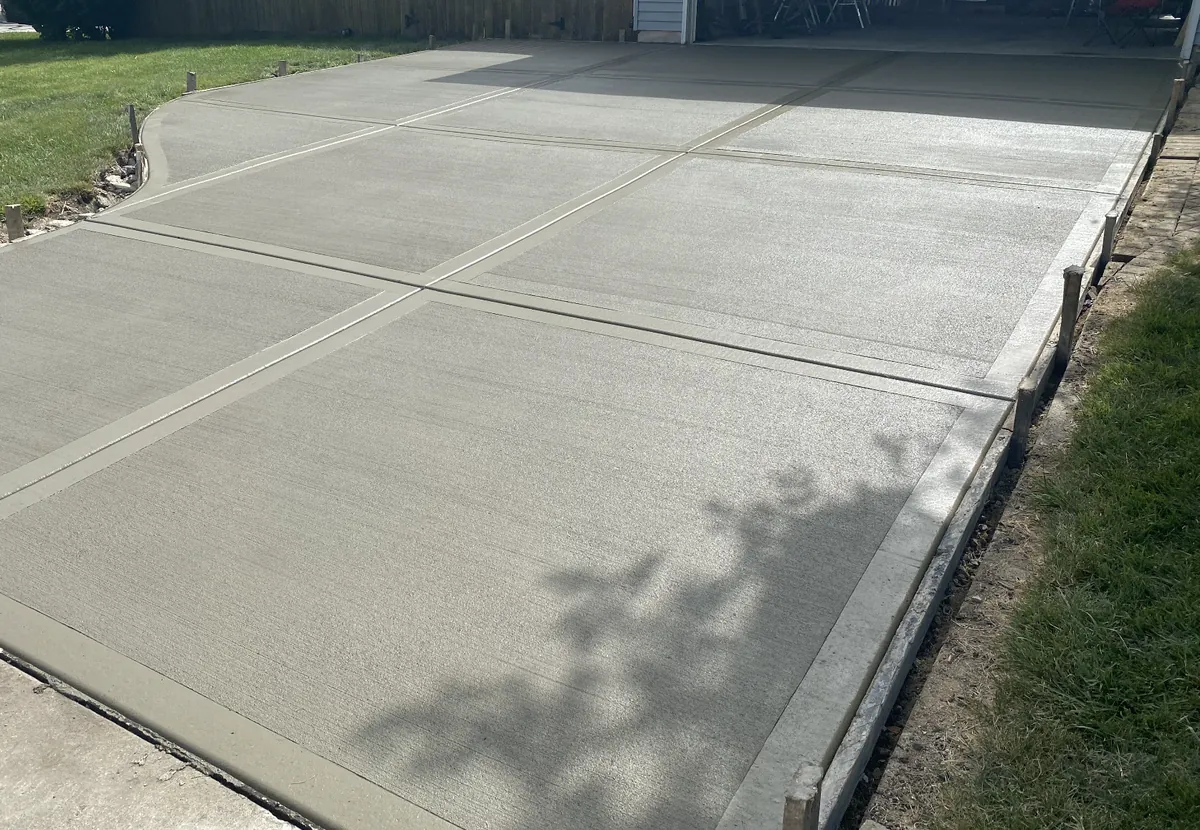
Read the Damage Before You Price a Concrete Repair
Pick what you see. Each entry says what is usually behind it, how serious it is, and what tends to work. One caution on crack width: there is no single number that settles it. Concrete Network notes that even the American Concrete Institute has no standard that decides repair by width alone. Width is a signal. Movement is the verdict.
Hairline Shrinkage Cracks
Thin, level on both sides, often showing up in the first year or so. Concrete shrinks as it dries, and all of it has some tendency to crack. A fine web of surface lines is crazing, which Concrete Network calls seldom a serviceability problem. The National Ready Mixed Concrete Association says most random early cracks, while unsightly, rarely affect structural integrity or service life.
What to do: usually nothing. Mark the ends and watch it. If it collects water and starts growing, seal it.
Cracks Wider Than a Credit Card
Try the card edge in the crack. Concrete Network treats cracks wider than a credit card and running through the depth of the slab as structural in nature, and it flags deep cracks or cracks over 1/2 inch wide as a greater concern. Most homeowner fillers are meant for cracks up to about 1/4 inch. In flatwork, a wide but level crack usually means the slab has pulled apart and stayed put, or it lacked joints where it needed them.
What to do: check it with the straightedge and mark it. A wide crack that is level and not growing is a sealing candidate. One that keeps opening has a cause under it to find first.
Offset or Heaved Cracks
Lay the straightedge across the crack. If one side sits higher, the slab has moved, either pushed up by frost or roots or dropped as the base settled. This is the sign that matters most, at any width, because no sealant can hold two pieces of concrete at the same height. It is also a trip hazard once the lip gets to be noticeable.
What to do: treat the cause. Settlement cracks usually call for removing the concrete and stabilizing the soil, per Concrete Network. On a panel that has dropped in one piece, slab lifting may be an option. Grinding down a lip fixes the trip hazard, not the movement.
Surface Scaling
The top skin flakes or peels off, starting in small patches that can merge. The NRMCA's scaling sheet grades it: light scaling does not expose the coarse stone, moderate scaling can take off up to about 3/8 inch of surface mortar, and in severe scaling the stone stands out. The usual causes are too little entrained air, a weak or overworked surface, poor curing, and heavy deicer use on young concrete.
What to do: minor scaling is cosmetic and does not have to be repaired. Light to moderate scaling on sound concrete can take a thin bonded repair, once the loose surface is removed. The same sheet says repair may not be feasible on slabs with excessive, progressing scaling, and that the repair material will not match the original color.
Pop-Outs
A small cone-shaped hole, from 1/4 inch to a few inches across, often with a broken piece of stone at the bottom. A porous stone near the surface absorbed water, froze, and blew the top off. These typically show up on exterior flatwork in the first year after the pour, according to the NRMCA's popout sheet, which calls most of them aesthetic.
What to do: leave them, or chip out the loose stone, clean the hole, and fill it with a repair mortar. The fill will be hard to color match. A slab covered in them lets more water in, so a surface that keeps popping deserves a closer look.
Spalls at Edges and Corners
A spall is a chunk that has broken away, deeper than scaling. You see them at joints, corners, and slab edges. People use "spalling" and "scaling" for the same thing, and even trade sources do. The useful difference is depth, because it decides whether a thin bonded repair can work or a real patch is needed.
What to do: tap around it with the hammer and mark where the sound changes. The hollow area is usually bigger than the visible hole, and all of it has to come out. A patch with cut edges on sound concrete can last. A smear of mortar over loose concrete will not.
Settled or Sunken Panels
One panel sits lower than its neighbor, or tilts, and water now collects on it or runs toward the house. Soft trench backfill, a washed-out base, and thin original pours are the usual stories here. On the original Kimball Hill blocks in Rolling Meadows, for example, slabs went in at three inches on barely compacted native soil.
What to do: ask two questions. Is the panel still in one piece, and is the ground under it done settling? If yes to both, lifting it may work for less than replacing it. If the panel is broken, or the base is still moving, it comes out.
Joint Failure
The joint has lost its filler, opened up, or chipped along its edges. Water now goes straight down into the base. Look closely at the corners, too. The NRMCA notes that D-cracks, from freeze-thaw damage to some porous stone, start at joints near the bottom of exterior slabs and appear at later ages. Closely spaced curved cracks hugging a joint on an old slab are one of the two exceptions to its "random cracks rarely matter" rule.
What to do: a sound slab with open joints is one of the best repair candidates there is. Clean or re-cut the joint and fill it with a flexible material. Crumbling concrete along the joint means the panel edge needs more than filler.
Concrete Crack Repair: Which Method Fits Which Crack
Cement crack repair comes down to one choice: are you trying to keep water out of a crack that will keep moving a little, or trying to glue a slab back together? In outdoor flatwork it is almost always the first one.
| Method | What it does | Works when | Fails when |
|---|---|---|---|
| Leave it and watch it | Nothing, and costs nothing. | Hairline, level, not growing, not holding water. | The crack is taking on water each winter and getting wider. |
| Rout and seal | A grinder or router opens the crack into a clean groove, and a flexible sealant fills it. | The slab is level and stable, and the goal is keeping out water. | The slab is moving up and down, or the groove was dirty or damp when it was filled. |
| Rigid patch filler | Trowels a cement-based or acrylic patch compound into the crack. | The crack is dormant and the patch is undercut so it can key in. | The crack still moves. Rigid filler cracks or lets go along its edges. |
| Epoxy injection | Bonds the two faces back together under pressure. | Structural cracks in walls, with a structural reason to reconnect them. | The crack keeps moving, or the injection is incomplete. |
| Polyurethane injection | Foams inside the crack to stop water. | Leaking wall cracks with slight movement. | Strength is the goal. It adds practically none. |
Routing and a Flexible Sealant
This is the standard answer for a stable crack in a slab. The reason to rout is that a sealant needs clean, sound faces to grip and enough room to flex. Squeezing caulk over a dirty hairline crack leaves a thin film that peels off. Concrete Network's crack repair guide undercuts wider cracks into an inverted V and sets foam backer rod in the deep ones, so the filler stays near the surface and uses less material. The repair will show. A sealed crack looks like a sealed crack, and on an old gray slab it reads as a dark line. On a slab that is otherwise fine, that is a fair trade.
Epoxy vs Polyurethane Injection
You will run into these two when you research crack repair, and most of what is written about them concerns basement walls. Concrete Network's injection article sums it up: epoxy is the choice when a crack needs structural repair, and polyurethane is usually best for a crack that only leaks, because it stays flexible and adds practically zero compressive strength. It also notes that incomplete injection is the most common reason these repairs fail. Foundation wall injection is a different trade from flatwork, and a leaking basement wall crack should go to a company that specializes in it. If someone proposes injecting a cracked patio, ask what problem it solves that a routed joint would not.
Concrete Slab Repair, From the Surface Down
Every slab repair is really a question of depth: how far down the damage goes, and whether the repair goes that far. The diagram shows how much of a typical slab each method reaches.
Bonded Patches for Small Damage
A patch is only as good as what it is stuck to. Concrete Network puts it bluntly: more repairs fail from poor surface preparation than from any other cause, and a repair material that shrinks will debond. So the loose concrete comes out, the surface is left clean and rough, and the material is one made for concrete repair, used as the maker says. A thin smear of mortar thinned out to nothing at its edges has no chance outdoors here.
Partial-Depth Repair
When a spall or a bad joint edge goes too deep for a thin patch but the bottom of the slab is sound, the damaged area can be cut out with square edges and rebuilt. The cut edge gives the patch something to bear against. This works in small areas. It stops making sense once the patches start to touch, or the hammer test finds hollow concrete well past the visible damage.
Full-Depth Panel Replacement at Joints
This is the repair most people do not know they can ask for. Because joints already divide a slab into panels, one or two bad panels can often be saw-cut out at the joints and replaced, leaving the rest of the slab alone. You fix the base under that panel, and you end up with full-thickness concrete instead of a thin layer. The trade-off is color. New concrete next to old will not match for years, and a straight cut at a joint is what makes that look deliberate.
Other Slab Repair Options
Two more options come up, each with a narrow job. Slab lifting raises a sunken panel that is still in one piece. Resurfacing puts a thin new wearing layer on a slab that is sound but ugly. Neither one fixes a slab that is broken up or still moving, and a thin layer follows whatever the concrete under it does. If lifting is the right call for your panel, a lifting company will likely charge less than a new pour would cost you, and we would rather tell you that than quote the bigger job.

Patio Repair or a New Patio?
Patio repair is a different decision from most concrete repair, because nobody drives on a patio and nobody but you is judging it. A crack in a patio is usually a looks problem until it becomes a tripping or drainage problem. That gives you more room to live with it.
- Check the pitch first. If the patio has tilted toward the house, water is the real issue. No crack filler changes the pitch.
- Check the joint at the house. An open gap there lets water run down the wall. It is often the most useful fix on the whole patio.
- Separate looks from function. Old exposed stone and decorative finishes do not patch invisibly. If it bothers you now, a repair will bother you too.
- Think about what is next. If you want a bigger patio anyway, money spent patching the old one is money not spent on the new one. A tired 1980s slab that is too small for how you use the yard is a different question from a broken one.
If the slab is past saving, our concrete patio page covers what goes into a new one. If it is sound and only has a crack or two, seal them and spend the money elsewhere.
Get a Straight Repair-or-Replace Opinion
If you have read the damage and still are not sure, send us a few details or call. We will come out, look at the slab and what it is sitting on, and tell you plainly whether we see a repair or a replacement. If it is a replacement, the estimate comes in writing. If it is a slab that should be left alone, we will say that too.
Prefer to talk it through? Call 847-610-6459, Monday to Saturday, 7am to 6pm.
Get a Free Estimate
Tell us about the project and we will get back to you within one business day. Prefer to talk? Call 847-610-6459.
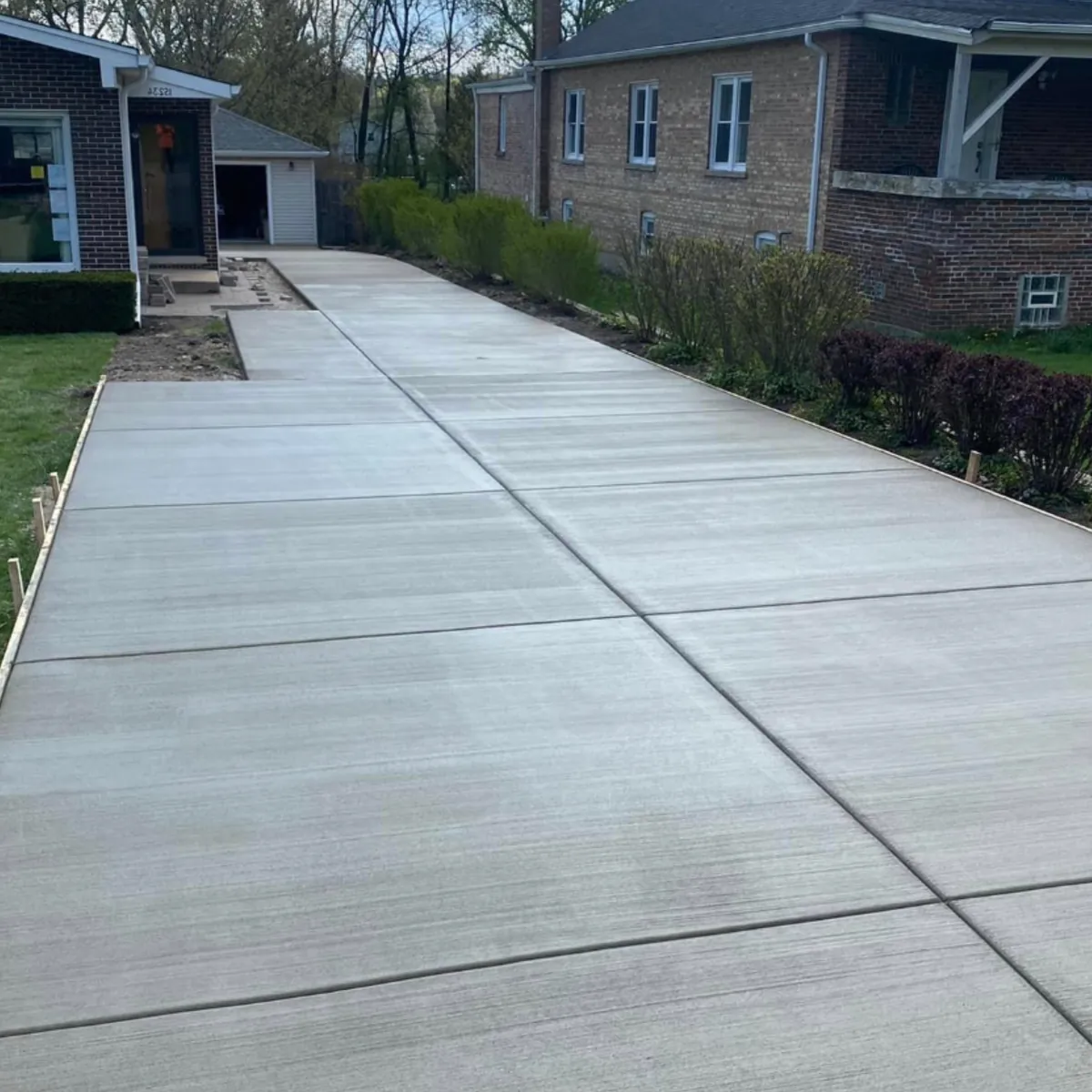
Every detail of the finished driveway looks amazing. The concrete cured beautifully, the surface is smooth, and the overall quality is outstanding.
Repair or Replace? Score Your Slab
Walk the slab with your hammer and straightedge, then check everything that is true. This is our rule of thumb, not an engineering test: the more of these you check, the less likely a repair is to be money well spent. If nothing is checked, you may not need anyone.
Nothing Checked: Leave It Alone
The slab is sound. Hairline cracks and a few pop-outs need nothing, and open joints or a stable crack can take a flexible sealant. This is the outcome where nobody should be selling you much of anything.
One or Two: Target the Bad Panels
A repair is still reasonable if the cause gets dealt with. That may be a patch, or one or two panels replaced at the joints. If what you checked was a raised crack or a sunken panel, find out why it moved before paying for anything.
Three or More: Price a Replacement
You are probably paying to delay the job. Get a replacement price next to any repair price so you can compare them over the years you plan to stay. A short stay can still justify the repair. We replace slabs for a living, so weigh our opinion with that in mind and get a second one.
The surface matters too. Each of these has its own page with what we do there: cracked or pitted garage floors, driveway joint work and replacement, front walks and public sidewalk panels, chipped or settled steps, and structural slabs and footings.
What Concrete Repair Costs
Published prices vary widely, and these are national, typical figures from the sources named, not quotes for your job. A small repair can carry a minimum charge, because the trip, the saw, and the crew cost about the same whatever the size.
| Work | National typical cost | Source |
|---|---|---|
| Fixing a crack yourself | $25 to $50 | Bob Vila, April 2024 |
| Pro repair of minor cracks | "A few hundred dollars" | Bob Vila, April 2024 |
| Patching cracks before resurfacing | $250 to $800 | Bob Vila, December 2023 |
| More extensive damage | $300 to $3,500 | Bob Vila, December 2023 |
| Driveway patching | $1.75 to $2 per sq ft | Fixr, January 2025 |
| Resurfacing a spalled driveway | $2.50 to $4 per sq ft | Fixr, January 2025 |
| Driveway replacement | $5 to $24 per sq ft | Fixr, January 2025 |
For a local comparison, a straightforward broom finish driveway replacement in Schaumburg and the nearby suburbs runs about $9 to $15 per square foot in 2026. Compare any repair price against how long you expect it to last, not just against that number.
Why Concrete Repairs Fail in the Northwest Suburbs
A patch that lasts for years somewhere mild can let go in two winters here. It is not because repair products do not work. It is because of what they are asked to survive.
Frost Runs Far Below the Slab
The village's climate table puts the frost line at 42 inches. A footing goes that deep. A slab does not. Schaumburg's spec for a driveway is 4 inches of concrete over 4 inches of compacted stone, so the frost goes well under flatwork, and the slab rides whatever the ground does. A repair has to live with that movement.
Clay Holds the Water
Native clay around here drains slowly. Water that gets through an open joint sits in the base, softens it, and freezes. That is why a failed joint or an open crack is worth dealing with early, and why a repair on a slab with a soft base is a short-term repair.
Freeze-Thaw and Deicers
The village rates weathering here as "Severe." Water expands as it freezes, and deicers make it worse by keeping the surface saturated and adding freeze-thaw cycles. The new repair material gets the same treatment as the old slab, and its bond line is the weakest place on it. The NRMCA's guidance is that sodium and calcium chloride are acceptable in moderate amounts, while ammonium sulfate, ammonium nitrate, and magnesium-based products attack concrete. Hose off the salt your car drops when you can.
The Slab Was the Problem
Some old slabs have nothing left to bond to. Thin pours, little or no entrained air, and joints spaced too far apart were common on older work. The NRMCA's jointing guidance today works out to about 10 feet of spacing on a 4-inch slab, with 15 feet as a limit. If your slab cracked midway between joints that are much farther apart, the crack is doing the job a missing joint should have done, and it will likely keep doing it.
Fix It Yourself or Hire It Out?
A lot of crack work is honest weekend work, and you do not need us or anyone else for it. The dividing line is whether the job takes judgment or heavy equipment.
Reasonable to Do Yourself
- Sealing cracks up to about 1/4 inch on level concrete
- Refilling open joints on a sound slab
- Filling a few pop-outs
- Marking cracks and watching them for a season
Clean the crack out, let it dry, and read the product's temperature limits before you start. Dirt and damp are what make DIY repairs fail.
Better to Hire Out
- Anything offset, or a panel that has dropped
- Cracks that keep growing or are numerous
- Saw-cutting and removing panels
- Leaks through a basement wall
- Anything in the public right-of-way
Concrete Network's advice is to call a pro when cracking is extensive or the cracks keep growing or show movement. We agree.
What to Ask a Concrete Repair Company
Searching for help nearby will turn up everyone from crack-injection specialists to lifting outfits to full-service concrete crews. Each one tends to see the fix it sells. These questions get past that, whoever you call, including us.
- What caused this? A good answer names the cause before it names the product.
- How do you know the slab has stopped moving? Listen for the straightedge, the hammer, and the history of the crack.
- How long do you expect this repair to last, here, outdoors? Any honest repair has a limit. Get it in plain words.
- What gets removed before the new material goes in? Repairs live or die on preparation.
- What happens if it fails? Find out what is covered in writing, and for how long.
- Will it match? It will not match exactly. Anyone promising an invisible repair on old concrete is overselling.
- What would you do if it were a replacement instead, and what would that cost? Seeing both numbers tells you more than either one.
- Do you need a permit, and who pulls it? In Schaumburg, a hired contractor needs a village business license before the permit is issued.
What Schaumburg Wants on a Repair
The Village of Schaumburg's Driveway Resource Guide has two fees worth knowing: $50 for a repair of less than 50% of a driveway, and $105 for new or replacement work. That line affects how a job is scoped. Replacing a couple of panels is a different permit from replacing the drive. The Sidewalk/Stoop Resource Guide lists $65 to install or replace a sidewalk or stoop. Fees can change, so confirm them before you budget.
The guides do not spell out every small job, such as filling a crack. If you are unsure whether your repair needs a permit, the Permitting Division of Community Development is at 847-923-4420. Panels in the public walk or the parkway are in village right-of-way, so ask before anyone cuts them. Outside Schaumburg, each village runs its own process, and unincorporated lots have their own rules.
Concrete Repair FAQ
No. A hairline crack that is level and not growing can be left alone. Fill or seal a crack when it is wide enough to take on water, when it is growing, or when it collects dirt and weeds. Marking the ends with a pencil and a date tells you which kind you have.
There is no single number. Wider than a credit card and running through the slab is worth a close look, and over 1/2 inch is a greater concern. But a narrow crack with one side higher than the other is more serious than a wide one that is level, because it shows the slab has moved.
Not exactly. The National Ready Mixed Concrete Association says repair material will not match the color and character of the original concrete. Old concrete has weathered, and new material has not. A clean, square repair at a joint looks deliberate. A blotchy patch in the middle of a panel does not.
Before the first hard freeze, in dry weather, within the temperature limits on the product. Dealing with an open crack in late summer or early fall keeps water out of it for the winter. If a repair cannot be done until cold weather, it is usually better to wait for spring than to rush a patch that goes into a freeze uncured.
That is a different trade from flatwork. Foundation wall crack injection is usually done by a company that specializes in it, typically with polyurethane for a leak and epoxy where a structural repair is needed. This guide covers slabs: patios, walks, drives, and floors.
For driveways, the village lists a $50 fee for a repair of less than 50% and $105 for new or replacement work. Sidewalks and stoops are $65 to install or replace. Small jobs like filling a crack are not spelled out in the guides, so call the Permitting Division at 847-923-4420 if you are unsure. Fees can change.
Repair Pages by Surface and Nearby Towns
Work by Surface
- Garage Floor Repair: crack sealing, patching, and full replacement of garage slabs.
- Concrete Steps & Stoops: reading steps for repair or replacement, and new poured stoops.
- Sidewalks & Walkways: joint work on sound walks and tear-outs of failed ones.
- Foundations & Slabs: footings, structural slabs, and settlement work.
- Contact us: send photos or set up a visit.
Aging Concrete in Nearby Towns
- Carol Stream: driveway slabs 40 to 55 years old, scaling at the apron or cracking at the old expansion joint.
- Rolling Meadows: original Kimball Hill slabs poured at three inches, now cracking through the middle.
- Mount Prospect: interwar garages with slabs never meant for modern loads.
Repair or Replacement? Ask Before You Spend.
Free on-site estimate within 48 hours. We will look at the slab, tell you plainly which one we see, and leave you with a written quote if the job is ours to do.
847-610-6459