
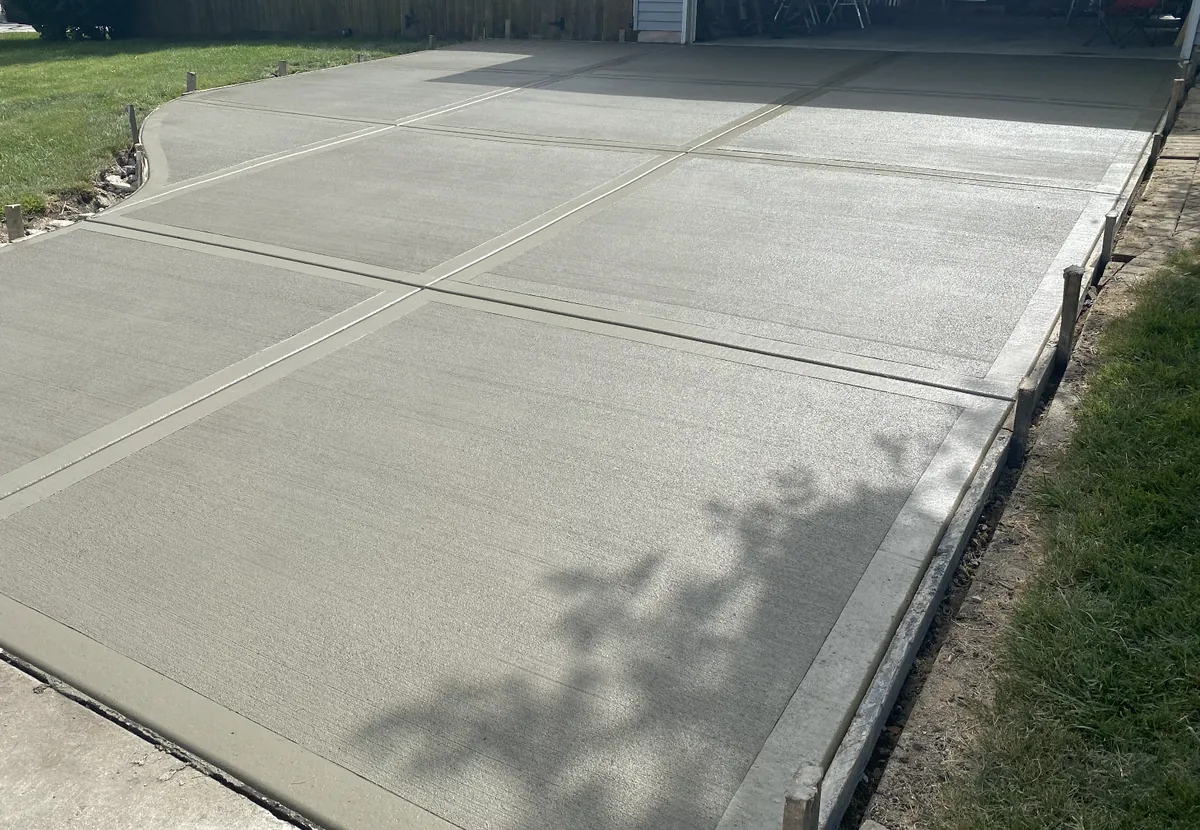
Concrete Sidewalks & Walkways in Schaumburg, IL
Front walks, village program panels, and ADA-ready ramps. Small jobs, tight rules, clean lines.
Free Sidewalk and Walkway Estimates in Schaumburg
A heaved front walk, a flagged village sidewalk panel, new steps, or a path to the backyard. Send a few details or call, and we will come out, measure, and put the estimate in writing.
Prefer to talk it through? Call 847-610-6459, Monday to Saturday, 7am to 6pm.
Get a Free Estimate
Tell us about the project and we will get back to you within one business day. Prefer to talk? Call 847-610-6459.
This is a great company that truly cares about their customers. We have collaborated on a few projects and everytime we have been impressed by the attention to detail and worksmanship. This company is a great resource for Schaumburg homeowners to consider when they are in the market for new concrete.
Concrete Sidewalks: Small Pours, Strict Geometry
A concrete sidewalk is the smallest piece of concrete we pour and the one with the tightest rules. Four inches thick, narrow run, no rebar most of the time. But every panel is subject to village spec, setback from the right-of-way, expansion details at every fixed structure, and ADA geometry on any ramp or curb cut. You can get a sloppy driveway to pass. You cannot get a sloppy sidewalk to pass.
Most of our sidewalk repair and replacement calls come from three places. First, front walks that have heaved or cracked across the middle because the original subgrade was clay loam that never got a stone base. Second, village sidewalk program panels where the public works department flagged a trip hazard and the homeowner needs someone to pour it before the deadline. Third, step and stoop repairs where the tread has pulled off the riser or the whole landing has settled an inch below the house.
As a concrete sidewalk contractor in Schaumburg, IL, we pour sidewalks and concrete walkways here and across the surrounding NW suburbs under both village-spec and private-spec rules. On program jobs we build to whatever the public works department puts on the stamp sheet. On private front walks we build to our own spec, which is a notch above village minimums because the walk has to last as long as the house.
Sidewalk Replacement, Walkway, and Step Work We Do
Front Walk Replacement
Full tear-out and repour of heaved, cracked, or settled front walks. Pitched away from the house, matched to the stoop elevation, tooled at the joints, and tied into the driveway or curb without a lip.
Village Sidewalk Program Panels
Panel-by-panel replacements under Schaumburg, Hoffman Estates, Palatine, and other village sidewalk programs. Poured to the public works department's panel dimensions and mix spec, inspected by the village before backfill.
ADA-Compliant Ramps
Curb cuts and transition ramps built to 1:12 maximum running slope, 2% maximum cross-slope, and detectable warning panels where the jurisdiction requires them. Verified with a digital level before the concrete is past plastic.
Garden & Side Path Walkways
Narrow-run walks connecting the driveway to the backyard, patio, pool, or rear garage. Tooled control joints, expansion at every fixed structure, broom finish for grip in wet weather.
Concrete Steps & Stoop Repair
Step replacements, tread leveling, riser reforming, and stoop tie-ins. Most stoop failures start at the landing joint where water gets behind the slab. We break out, re-form, and re-pour with proper flashing at the house wall.
Joint & Crack Repair
Targeted saw-cut and seal work on otherwise sound walks. If the slab is structurally fine but the control joints have opened up or a hairline crack is letting water in, we re-cut and re-seal before it turns into a replacement.
How We Spec a Concrete Walkway
Walks look simple. They are not. Here's what matters on every residential walkway, whether it's a 12-foot front walk or a 40-foot garden path:
- Thickness matched to the load. A walk gets thicker where it crosses a driveway or carries any vehicle load, with a thickened edge at the transition so the tires don't shear the corner off.
- Air-entrained mix. Walks sit right next to the lawn and catch everything the sprinklers throw at them. Proper air entrainment is what keeps the surface from scaling after three winters of salt.
- Tooled control joints, laid out and cut on time. Joint spacing follows the slab thickness, so a thin walk needs its joints closer together. Cut while the concrete is still green for a clean groove.
- Expansion at every fixed structure. House foundation, stoop, driveway edge, light post, mailbox pad. Preformed filler at each one lets the slab move without cracking the thing it's butted up against.
- Welded wire mesh on village-program panels and soft-subgrade runs. Mesh chaired mid-depth. Private walks on sound subgrade usually don't need it, but the spec sheet wins every argument.
- ADA geometry held to 1:12 max running slope and 2% max cross-slope on ramps and curb cuts. We check with a digital level before the surface sets. Re-doing a ramp because it's 1 percent off is not a mistake we make twice.
- Broom finish drawn perpendicular to the direction of travel. Tooled edges on every exposed side. Clean, grippy, and matches the aesthetic of every other residential walk on the block.
Village Sidewalk Programs, Permits, and the Weather Window
Schaumburg, Hoffman Estates, Palatine, Arlington Heights, and most of our other service-area suburbs run annual sidewalk replacement programs. Public works inspectors walk the neighborhoods, flag panels that have heaved, cracked, or trip-hazarded, and schedule them for replacement. The exact cost structure varies by village and by program year: some suburbs fund full-village replacement, some run cost-share arrangements where the homeowner covers a portion, and some only handle panels in the public right-of-way. We do not quote program terms here because they change; we work with whatever framework your village is running in the current year. Call your public works department first, then call us for the pour.
On private front walks and garden paths, the permit picture is simpler. Same-footprint replacements on private property usually don't need a permit. New walks that change the layout, extend past a right-of-way line, or add a curb cut almost always do. We pull whichever permits the job needs and handle the inspection scheduling.
Our walkway pour window runs from early April through mid-November in a typical year. Late-season jobs get insulated blankets and, when overnight temperatures drop near freezing, heated enclosures. We will not pour a thin 4-inch walk under 25 degrees because the surface scales the moment the salt comes out in December, and a freshly scaled front walk is a far more visible failure than a scaled driveway. If the weather forecast says no, we reschedule rather than fight the calendar. Good concrete comes from good decisions about when not to pour.
What a Concrete Sidewalk or Walkway Costs in Schaumburg
Walks are small jobs, and small jobs price differently than big ones. The truck, the crew, and the forms show up whether the walk is 12 feet long or 60, so a short front walk costs more per foot than a long run.
Past length and width, the price moves with how much old concrete comes out, whether tree roots have to be dealt with under the old panels, steps or a stoop tied into the walk, any ramp that has to meet ADA slopes, and whether the work sits in the right-of-way and needs a permit. On village program panels, how the cost is split between you and the village depends on that year's program.
We measure the run and put the scope and the price in writing. If part of the walk is the village's responsibility, we will say so before you pay for it.
Concrete Sidewalks & Walkways FAQ
It depends on the village and the program year. Some NW suburbs run full-village replacement programs, some run cost-share arrangements where the homeowner pays a portion, and some only fund work inside the public right-of-way. Terms change year to year. Call your village public works department for the current year's eligibility rules, and we can bid the pour work inside whatever program you're working under.
A tooled joint is grooved into the wet concrete during finishing, which gives a rounded edge and a slightly wider profile. A saw cut is made the day after the pour with a walk-behind saw and gives a cleaner, straighter line. We use tooled joints on most residential front walks because they're faster and match the traditional look. Saw cuts go in when the village spec calls for them or on long runs where appearance matters.
Load. A driveway carries vehicle weight and the occasional delivery truck or trailer. A residential walk carries foot traffic, a snow blower, and maybe a wheelbarrow, so the structural demand is much lower. We do go thicker at any point where a walk crosses a driveway, an apron, or a spot where a vehicle might roll over it, with a thickened edge at the transition.
For a same-footprint residential front walk on private property, usually no. For any walk in the public right-of-way, including most village sidewalk program panels, a permit is required and we pull it as part of the job. If you're changing the walk layout, adding width, or extending it out to a new curb cut, check with your village zoning or public works department before we form anything.
Foot traffic after 24 hours in normal spring or summer weather. Full design strength comes in around day 28. Keep the new walk clear of furniture, heavy planters, and especially deicing salt for the entire first winter. Fresh concrete and rock salt are a bad combination, and the scaling you get from early salt exposure is permanent.
Related Services & Service Areas
Other concrete work we do
- Concrete Driveways: new pours, tear-outs, and driveway apron work.
- Concrete Patios: backyard slabs, pool decks, and outdoor kitchen pads.
- Foundations & Slabs: garage floors, addition footings, basement floor replacements.
- Stamped Concrete: stamped patterns for decorative walkways and patios.
Sidewalk replacement in nearby suburbs
- Streamwood: front walk replacements and village program panels.
- Rolling Meadows: ADA ramp work and stoop repairs on older streets.
- Bartlett: garden paths and side walks on larger lots.
Flagged Panel or Heaved Front Walk?
Free on-site estimate within 48 hours. We'll walk the run with you, measure the geometry, check the subgrade, and leave you with a written scope and quote, plus a clear answer on whether you need a permit or not.
847-610-6459