
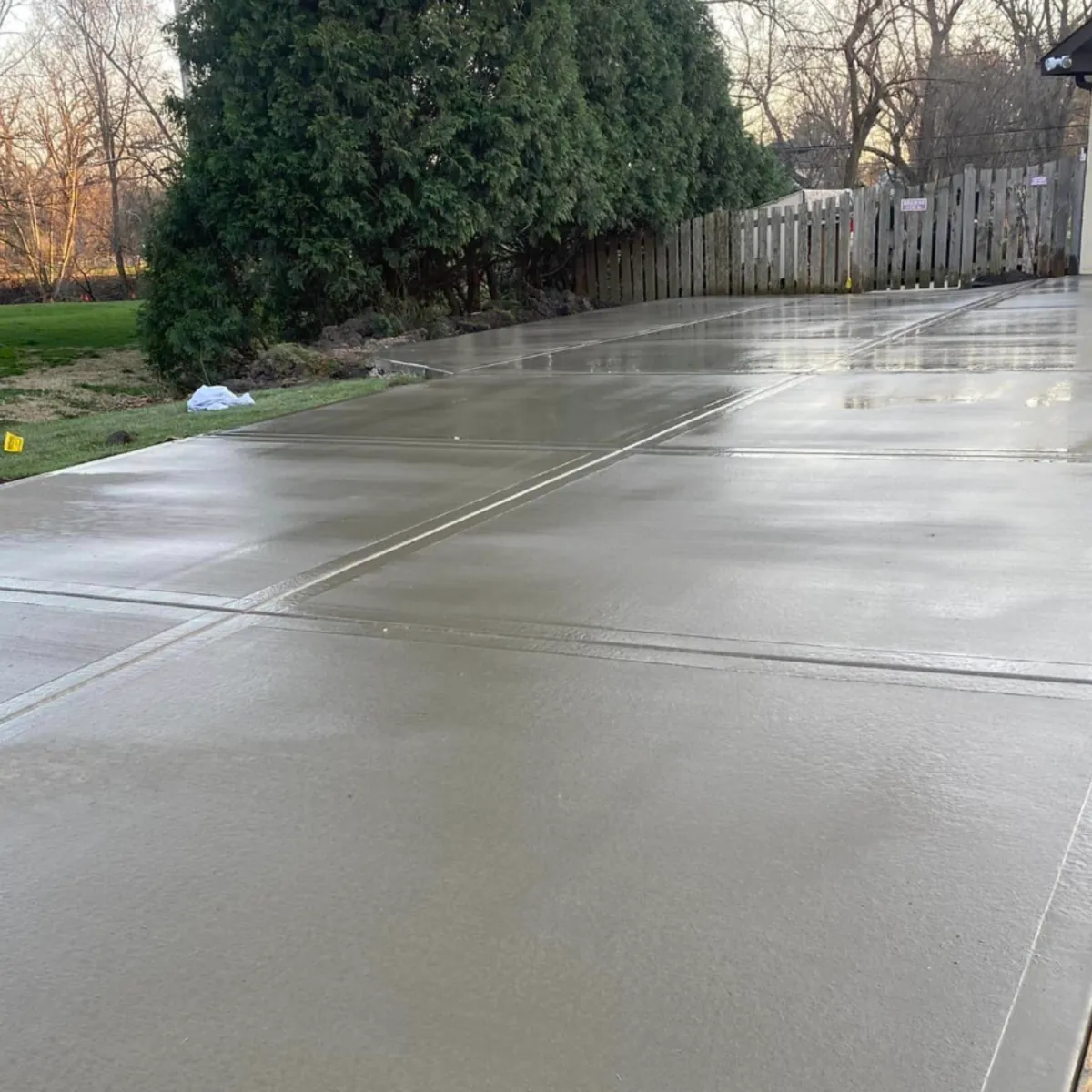
Concrete Foundations & Slabs in Schaumburg, IL
Addition footings, garage floors, basement slab replacements. Poured to Illinois frost depth and signed off by the inspector.
Free Estimates on Concrete Foundations and Slabs
Addition footings, a garage floor, a basement slab, or a pad for a shed. Tell us what you are building and we will look at the site, review the plans if you have them, and put the estimate in writing.
Prefer to talk it through? Call 847-610-6459, Monday to Saturday, 7am to 6pm.
Get a Free Estimate
Tell us about the project and we will get back to you within one business day. Prefer to talk? Call 847-610-6459.
This is a great company that truly cares about their customers. We have collaborated on a few projects and everytime we have been impressed by the attention to detail and worksmanship. This company is a great resource for Schaumburg homeowners to consider when they are in the market for new concrete.
Foundations and Slabs: Structural Concrete, Not Finish Concrete
A foundation is the only concrete on your property that cannot fail quietly. Everything above it (the framing, the drywall, the finish floor, the cabinets the trim carpenter just installed) assumes the concrete underneath did its job. When a footing heaves, an addition moves. When a basement slab cracks across the middle, the plumber's drain line goes with it. Structural slabs and footings get poured once and have to hold for the life of the house.
As a concrete foundation contractor in Schaumburg, IL, we pour foundations, footings, garage floor slabs, addition stem walls, and basement slabs here and across the surrounding Northwest Chicago suburbs. Most of our structural work comes in three flavors: new additions where a framer is waiting on the rebar inspection, basement floor replacements after plumbing or drain-tile jobs, and garage teardowns where the original 1960s slab has finally given up. Every one of those jobs gets tied in, spec'd, and inspected before anyone backfills or stands a wall.
Structural concrete is a different animal from flatwork you can walk on and forget about. The loads above are measured in thousands of pounds per lineal foot. The inspector is going to show up before the pour. The framer's schedule depends on us being ready on the day we said we would be. We build that coordination into the quote, not onto the back of a napkin when the truck is already on site.
Foundation, Footing, and Concrete Slab Work We Do
Garage Floor Slabs
New garage builds and full-depth slab replacements on teardown garages. Slab-on-grade over compacted CA-6 and a vapor barrier, pitched to the overhead door so melt water and salt brine drain out instead of pooling against the wall studs. For a cracked, pitted, or sunken floor, see garage floor repair.
Addition Footings & Stem Walls
Frost-depth footings and poured stem walls for room additions, sunrooms, three-season porches, and dormer extensions. We drill and epoxy rebar dowels into the existing footing so the new foundation ties cleanly into what's already there.
Basement Floor Replacements
Full basement slab tear-outs and repours, often after a plumber runs new drain lines or a mason re-does the drain tile. Saw-cut the perimeter, break out the old pour, re-level the stone base, lay fresh vapor barrier, and pour back to grade.
Shed & Outbuilding Pads
Monolithic thickened-edge pads sized to the structure going on them. Proper gravel base, control joints laid out for the footprint, and a slope off the building line so nobody ends up fighting a dirt dam behind the shed in two years.
Crawl Space Rat Slabs
Two- to three-inch unreinforced caps over dirt crawls to seal out soil moisture, vermin, and radon. Not structural, but they keep the crawl dry, clean, and usable, and they protect the wood framing above from decades of vapor drive.
Concrete Repairs & Underpinning Tie-Ins
Slab settlement repair, cold joint reconstruction, and concrete work on jobs where a foundation repair crew has set helical piers or push piers. We handle the slab and footing tie-ins after the piers are locked in.
How We Spec a Foundation or Concrete Slab
Structural concrete is not the place to save money on the parts nobody sees. Here's what matters on every footing and every slab that has a roof over it or a load on top of it:
- Footings poured to 42" minimum depth. Illinois frost line for Cook and DuPage Counties. Shallower footings heave, and heaved footings crack everything above them. No negotiation on the number.
- Mix matched to the job, air-entrained for exterior slabs and garage floors. Air entrainment is what lets the surface survive freeze-thaw exposure where it's wet.
- Reinforcement sized to the load on structural slabs. Tied at intersections, chaired mid-depth. Not mesh dropped on grade while the truck is already backing up to the forms.
- Poly vapor barrier under interior slabs and garage floors. Laps taped, turned up at the wall, cut clean around plumbing penetrations. It's the difference between a dry slab and a slab that weeps every spring.
- A compacted stone base, rolled in lifts. Sub-base prep is where slabs actually fail. We compact what we place, we don't dump eight inches and call it a day.
- Control joints laid out and cut on time. They give the slab a planned place to crack as it shrinks. Joint layout gets drawn before the pour, not improvised with the saw running.
- Inspection scheduling baked into the quote. We call for the footing pin, the pre-pour rebar, and the final slab inspection. The framer doesn't sit on the village and the village doesn't sit on us.
Pouring Structural Concrete Through the Illinois Calendar
Foundation work in our service area runs from mid-March through late November most years. In that window, ground temperatures are warm enough that a footing can be dug clean, a slab can cure without accelerators, and a basement wall can strip the next morning without frost damage on the form face. Outside the window, we still pour for urgent jobs (additions that got framed late, basement floors that failed mid-winter) using insulated blankets, heated enclosures, and admixtures that keep the hydration reaction running when the air is below freezing. It costs more, and we're upfront about that on the estimate.
Frost depth is the keystone number for everything we pour below grade. A 42-inch footing holds because the soil below that line doesn't freeze. A shallower footing, the kind some crews will still pour on a cold morning to save time on the backhoe, freezes solid every January, lifts, and drops the entire structure above it. Heave damage on a first-year addition is one of the most expensive mistakes in residential construction, and it is almost always a footing-depth problem. The other wrinkle around here is clay subsoil, which is why every slab we pour sits on a rolled CA-6 stone base rather than directly on native grade. Stone gives the slab a consistent platform regardless of what the clay below is doing that week.
What a Concrete Foundation or Slab Costs in Schaumburg
There is no honest per-square-foot number for structural concrete, because two jobs with the same footprint can be very different pours. A garage floor slab on an open lot is mostly concrete and finishing. An addition footing is mostly digging: down to the 42-inch frost depth, formed, reinforced, inspected, and only then poured.
The things that move the price are how deep the excavation goes, how the concrete gets to the hole (straight off the chute or through a pump), tear-out and haul-off of an old slab, reinforcement and vapor barrier, and how many inspections the village wants before the pour. A basement floor replacement adds the work of breaking up the old slab and getting it out of the basement.
We look at the site and the drawings first, then put the scope and the price in writing, so the framer and the general contractor are working from the same plan we are.
Concrete Foundations & Slabs FAQ
Frost depth. Water in the soil freezes and expands, and if your footing isn't below the freeze line it lifts every winter and settles every spring. Cook and DuPage counties have adopted 42 inches as the minimum footing depth for heated residential structures. Garage footings and attached outbuildings go to the same depth. Cutting that number short is how porches and additions pull away from the house after two or three winters.
Yes. A vapor barrier isn't about standing water or snow melt. It's about soil moisture wicking up through the slab. Without one, you get efflorescence on the surface, rust on stored tools, damp cardboard at the bottom of boxes, and a floor that never really dries out. We put a poly vapor barrier under garage floors and a heavier one under any slab that's going to see interior living space. Cheapest insurance policy in a concrete job.
Yes, and it's one of the most common structural jobs we run. The walls stay. We saw-cut the perimeter a few inches off the footing, break out and haul the old slab, re-excavate to subgrade, re-compact the stone base, lay fresh vapor barrier, and pour a new slab tied back to the existing footings. Most residential basement floor replacements run two to three days on site once we're inside.
CA-6 is a graded crushed limestone aggregate specified by the Illinois Department of Transportation. It's a blend of sizes from dust up to about an inch that compacts to a dense, stable platform and still drains. Every structural slab we pour sits on a rolled CA-6 base, not pea gravel and not native clay. Sub-base failure is the single most common reason a residential slab cracks in its first few years.
On an addition, the general contractor usually pulls one permit that covers the whole build, and we slot our concrete work inside that permit. On a standalone slab or footing replacement with no framing above it, we pull it ourselves. Either way we handle the concrete inspection calls. The village wants to see rebar and vapor barrier before the truck arrives, and we hold the pour until the inspector signs off.
Related Services & Service Areas
Other concrete work we do
- Concrete Driveways: new pours, tear-outs, and apron work coordinated with your village permit.
- Concrete Patios: broom, exposed aggregate, and stamped patios with proper drainage at the house tie-in.
- Sidewalks & Walkways: front walks, ADA ramps, and village sidewalk program panels.
- Stamped Concrete: stamped finishes for patios, pool decks, and walkway runs.
- Garage Floor Repair: crack repair, pitting, sunken slabs, and full garage floor replacement.
Structural concrete in nearby suburbs
- Hoffman Estates: addition footings and garage teardowns in older Parkwood and Hilldale blocks.
- Palatine: basement floor replacements and crawl space rat slabs.
- Elk Grove Village: new garage floor slabs and addition foundations on mid-century lots.
Building an Addition or Replacing a Basement Floor?
Free on-site estimate within 48 hours. We'll walk the site with you, check footing depth, subgrade, and access for the pump or chute, and leave you with a written spec and quote, not a lump-sum number.
847-610-6459